
When we think of big names in natural science, male scientists often spring to mind first. But in herpetology – the study of reptiles and amphibians – women have made significant contributions despite social barriers.
On today’s occasion, ‘Women in Science,’ we would like to show that it was also women who have had a lasting impact on our knowledge of reptiles and amphibians.
Every year on 11 February, the International Day of Women and Girls in Science is celebrated. This commemorative day has been organised by UNESCO and UN Women since 2016 and is intended to remind us that women and girls play an important role in science and technology – but that their representation in STEM subjects (science, technology, engineering and mathematics) is still too low. Therefore, increased attention combined with many events should help to bring more women into these fields.
🐉 Joan Beauchamp Procter (1897–1931)
One of the most impressive herpetologists of the early 20th century was the British zoologist Joan Beauchamp Procter.
She was appointed as the first female curator of reptiles at the British Museum (Natural History) and later worked at London Zoo. She became particularly well known for her work with Komodo dragons – at a time when very little was known about these animals.
She also designed the then revolutionary reptile house at London Zoo – a milestone in species-appropriate husbandry and scientific observation.
London Zoo tells the story of her reptile house here. Groundbreaking detail:
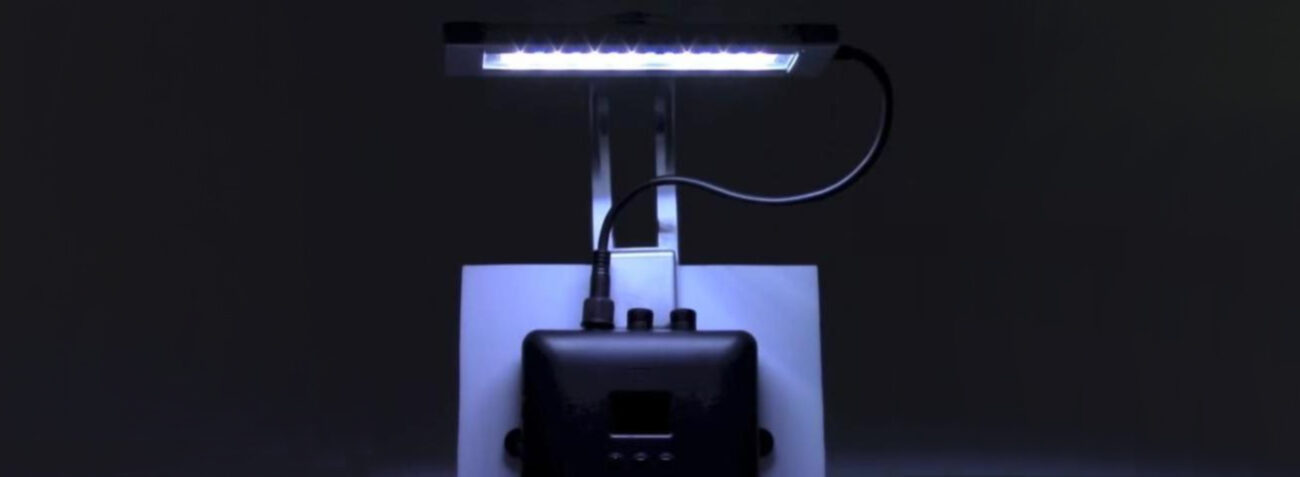
Joan Protcter’s Reptile House design included ‘vita glass’ which provided natural ultraviolet light needed by the reptiles, and was a high tech concept at the time.
Thanks to her detailed knowledge of animal biology, she already knew back then that UV light is essential for the animals’ health!
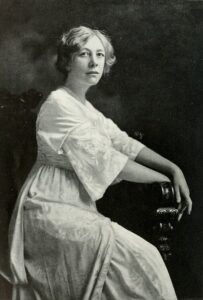
🐸 Mary Cynthia Dickerson (1866–1923)
Mary Cynthia Dickerson was the first curator of herpetology at the American Museum of Natural History. She established the herpetology department there and described numerous new species, including over twenty new reptile species.
Her work ‘The Frog Book’ became a standard work on amphibians – well-researched, precise and at the same time accessible. Unfortunately, her health suffered from too many tasks as a lecturer and at the museum, and she died at the age of only 57.
But her work lives on. Curious? Thanks to digitisation by the Internet Archive, you can browse through ‘The Frog Book’ (English original) for free here.
And here is a video of a lecture about the researcher, also in English:
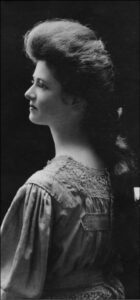
🦎 Helen Thompson Gaige (1890–1976)
At the University of Michigan’s Museum of Zoology, Helen Thompson Gaige devoted decades to researching amphibians and reptiles.
She made important contributions to taxonomy and field research and was active at a time when scientific careers for women were anything but commonplace.
She travelled extensively for her research; on a research trip to Panama, she lost a finger when her rifle misfired and nearly died of tetanus in the rough terrain where she was searching for discoveries. She only survived because the life-saving medication was dropped from an aeroplane. The incident did not dampen her enthusiasm for research (or her willingness to travel).
Her story is told here: The Improbable Herpetologist.

🌍 Dr. Earyn McGee
Fast forward to the present day: modern herpetology is shaped – at least in the USA – by Dr Earyn McGee, among countless others.
As a scientist and science communicator, she draws attention to reptiles with projects that are low-threshold, high-profile and inclusive. One example is #FindThatLizard: under this hashtag, Dr McGee regularly posted search images on Tritter (now X) in which a salamander or similar animal had to be found. In this way, she trained people to look out for these all-too-often overlooked animals. The images can still be found under the hashtag – try it for yourself. It’s fun and often really difficult!
In addition to her research and communication work, McGee is also actively committed to promoting diversity in the natural sciences. In response to a promotional video by Discovery that featured almost exclusively (white) men, she participated in a ‘counter-video’ by biologist Sarah McAnulty and the hashtag campaign #ScienceIsForEveryone on X, which aimed to make female scientists more visible.
You can find out more about her activities on her own website, among other places.
🌎 Global Women in Herpetology (international network of female herpetologists)
An inspiring example of international networking is the Global Women in Herpetology project, founded by
- Dr. Sinlan Poo (Taiwan)
- Dr. Itzue Caviedes-Solis (Mexiko)
- Dr. Umilaela Arifin (Indonesien)
The aim is to raise awareness of the stories of female reptile and amphibian researchers worldwide – and to provide role models for young female scientists. Germany is represented here by Dr Katharina Ruthsatz. The network has published a wonderful book in which 50 female herpetologists from around the world tell their stories.
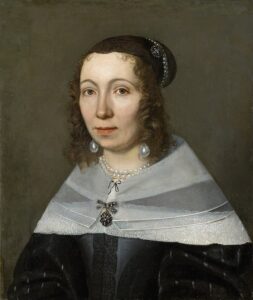
🌿 Maria Sibylla Merian (1647–1717)
We conclude the list with the most famous fore’mother’ of biology: Maria Sibylla Merian.
Long before modern herpetology, Maria Sibylla Merian observed and illustrated animals in their natural habitat – at a time when this was still extremely unusual, even for men! Nevertheless, she was fortunate that her achievements were highly recognised during her lifetime.
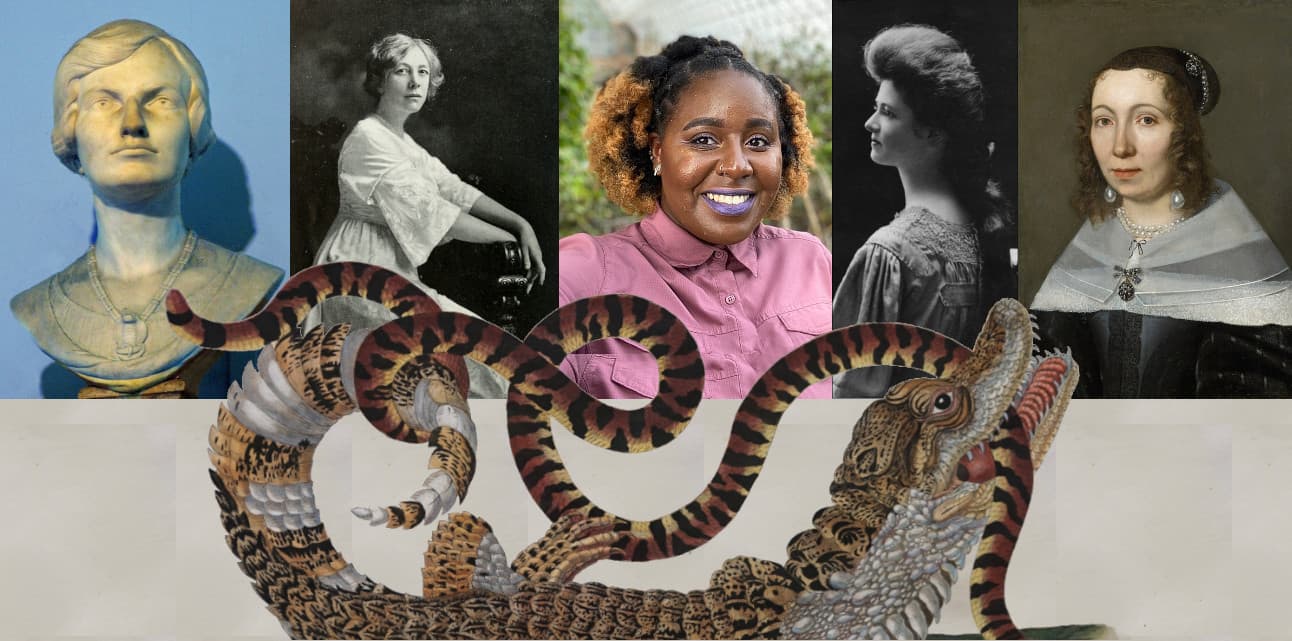
As a highly talented artist who had also been trained in painting by her stepfather, her main interest was insects and their various stages of development. During her expedition to Suriname, however, she documented not only insects but also reptiles – lifelike, detailed and scientifically valuable. And she always depicted her subjects not just passively, ‘lying dead’, but alive in their natural behaviour (albeit perhaps somewhat embellished in some cases). Such as, for example, the ‘Caiman with coral snake’ shown in the title (source: Wikimedia, CC BY-SA 4.0).
Maria Sibylla Merian was one of the first women to pursue natural history as an independent scientific activity!
Why this is important today
The history of herpetology shows that science thrives on curiosity, observation and passion – not gender.
Gerade in der Reptilien- und Amphibienkunde, die häufig mit Feldarbeit, Expeditionen und Spezialwissen verbunden ist, haben Frauen trotz struktureller Barrieren Großes geleistet – und tun es bis heute.
As part of an industry that deals with reptiles, amphibians and their living conditions on a daily basis, we would like to express our respect for these female researchers.
Without their work, we would know much less about the behaviour, systematics, protection and species-appropriate husbandry of these fascinating animals.