
When setting up a terrarium, people often think first of equipment, furnishings or temperature zones. But for the animal itself, something else takes centre stage: light.
Not as an accessory.
Not as a decorative element.
But as a biological necessity.
Whilst we humans perceive light primarily as brightness, for reptiles it is much more — it is essentially a complete information system!
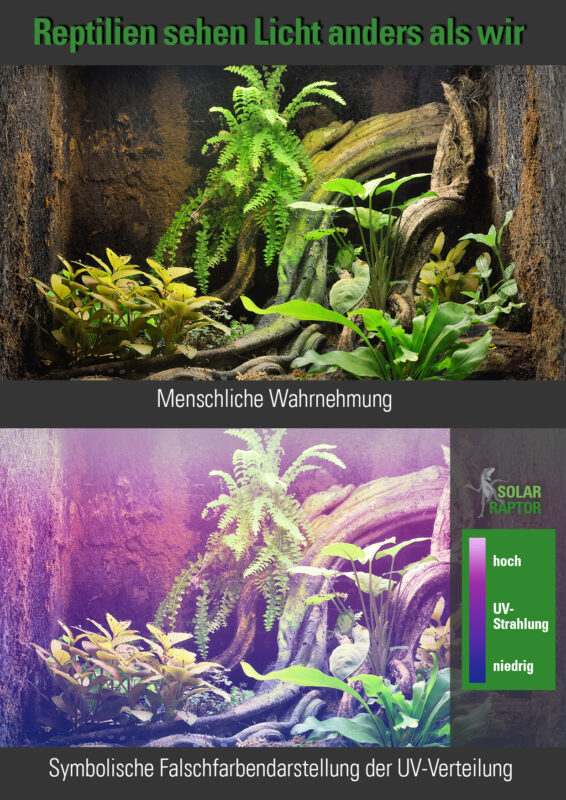
Reptiles see more than we do
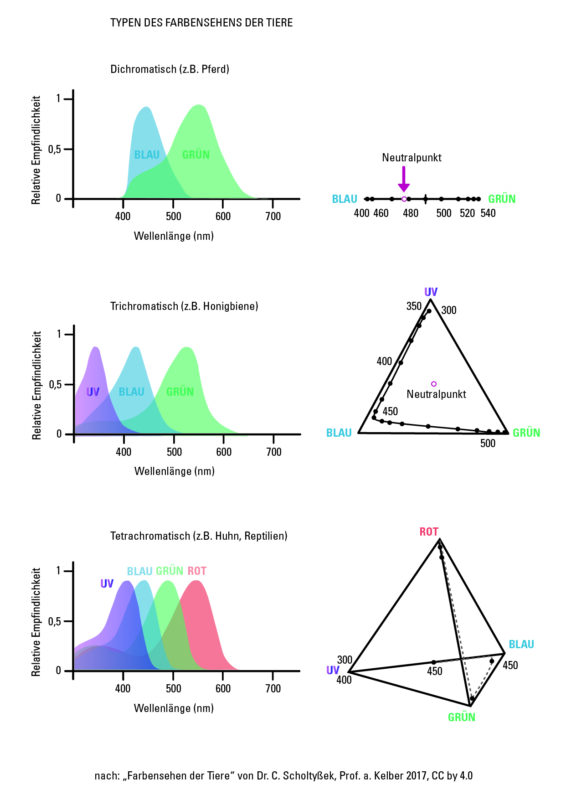
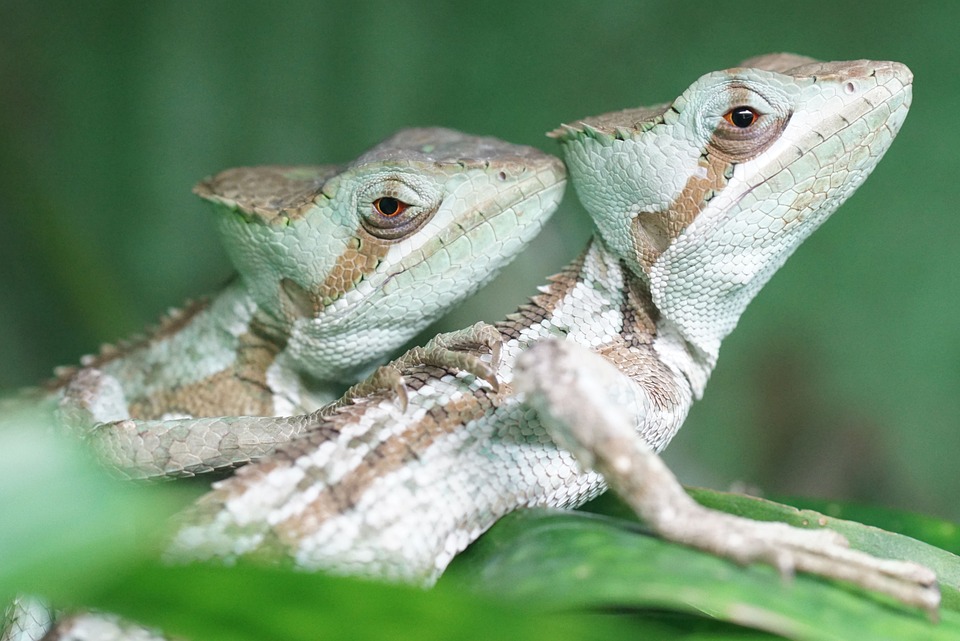
This is because reptiles see differently and, as a result, see more than we do. This is due to their different photoreceptors, as reptiles are ‘tetrachromats’: they have four different types of cones in their eyes, i.e. photoreceptors with different light-sensitive proteins, the ‘cone opsins’.
One of these types detects parts of the UV spectrum – particularly UV-A. Consequently, the so-called ‘white point’ or neutral point, at which something appears colourless or neutral, is different from that of trichromats (e.g. humans) or dichromats (e.g. horses).
This means:
Where two things look the same to humans, they may appear completely different to a reptile. Skin markings, conspecifics, territorial markings – many things only become visible through UV light.
Just as things appear a ‘uniform’ grey to people with red-green colour blindness when they actually have a red-green pattern, reptiles perceive things that appear uniformly coloured to us humans as much more colourful. But only if their environment is also illuminated with light containing UV components!
If this spectral range is missing from the terrarium, the animal is effectively deprived of an entire dimension of vision and thus a whole part of its environment; its habitat then appears ‘unnaturally dreary’ and colour-shifted. Keeping reptiles without UV light in their lighting therefore cannot be considered species-appropriate. And it can affect the animals’ entire behaviour, both individually and in their interactions with one another.
UV-B: The Invisible Health Factor
UV-B radiation is equally important. It enables the body’s own synthesis of vitamin D₃.
Vitamin D₃ regulates:
- calcium metabolism
- bone development
- muscle and organ functions
the immune system - the immune system
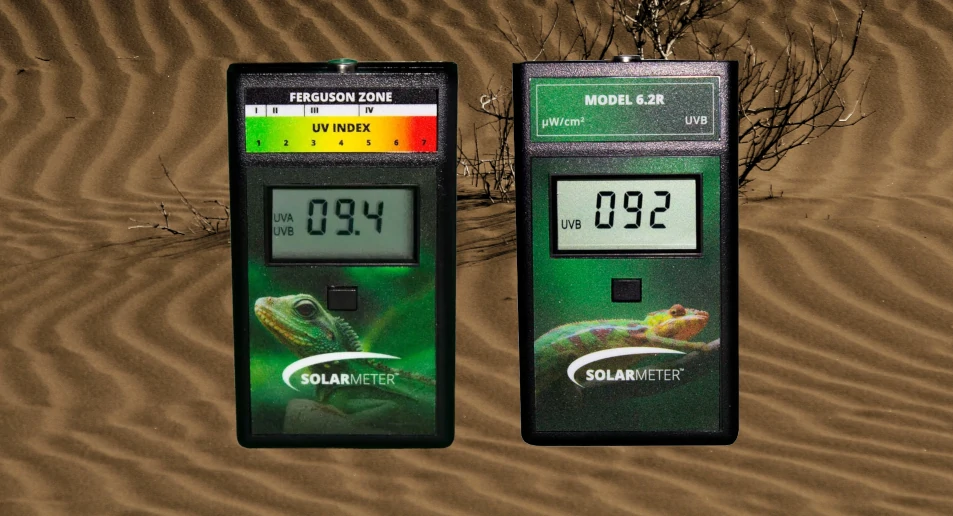
Without an adequate supply of UV-B, serious deficiency diseases can therefore occur – even under seemingly ‘bright’ lighting.
Light Influences Behaviour
Finally, for all living creatures, including reptiles, a species-appropriate, physiological day-night cycle (‘circadian rhythm’) is also an important factor in their health. However, reptiles do not live by the clock – they live by light.
Through the UV index and intensity, light influences the animal’s daily routine. And this, in turn, determines
- activity phases
- food intake
- skin shedding
- reproductive behaviour
- and thermoregulation (sunny & shaded spots)
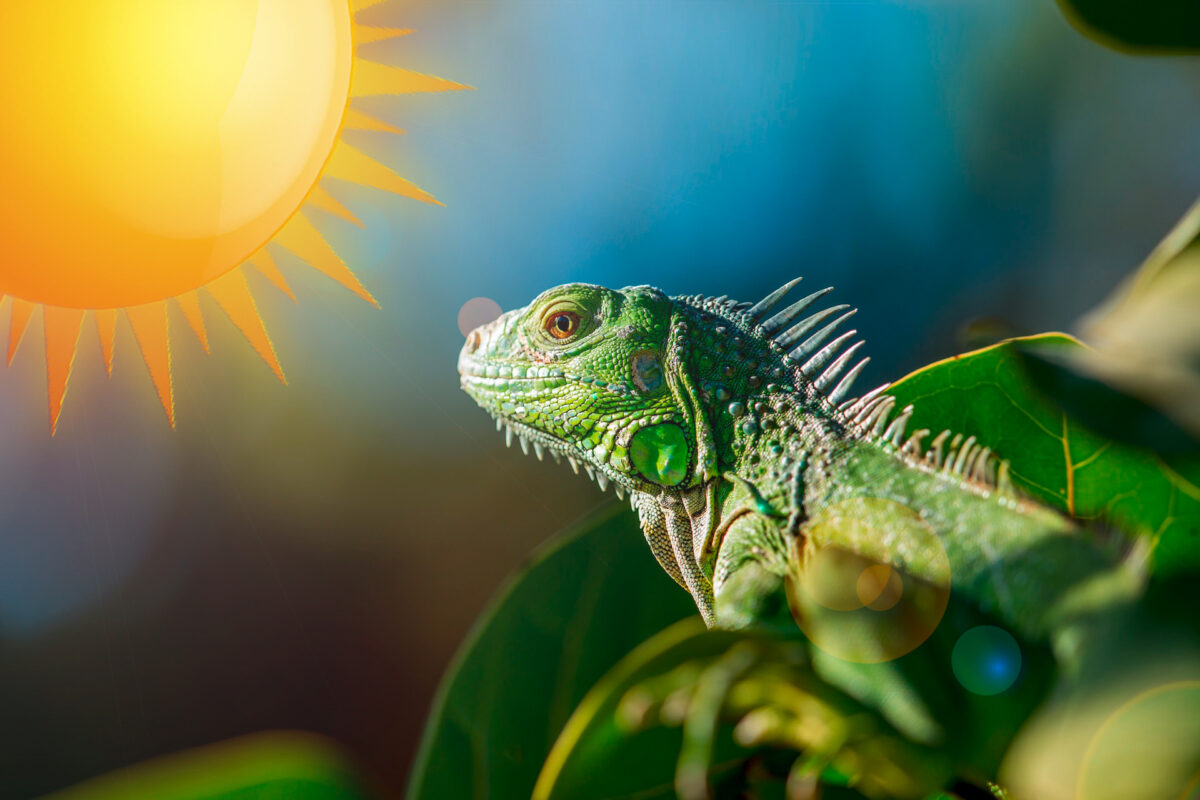
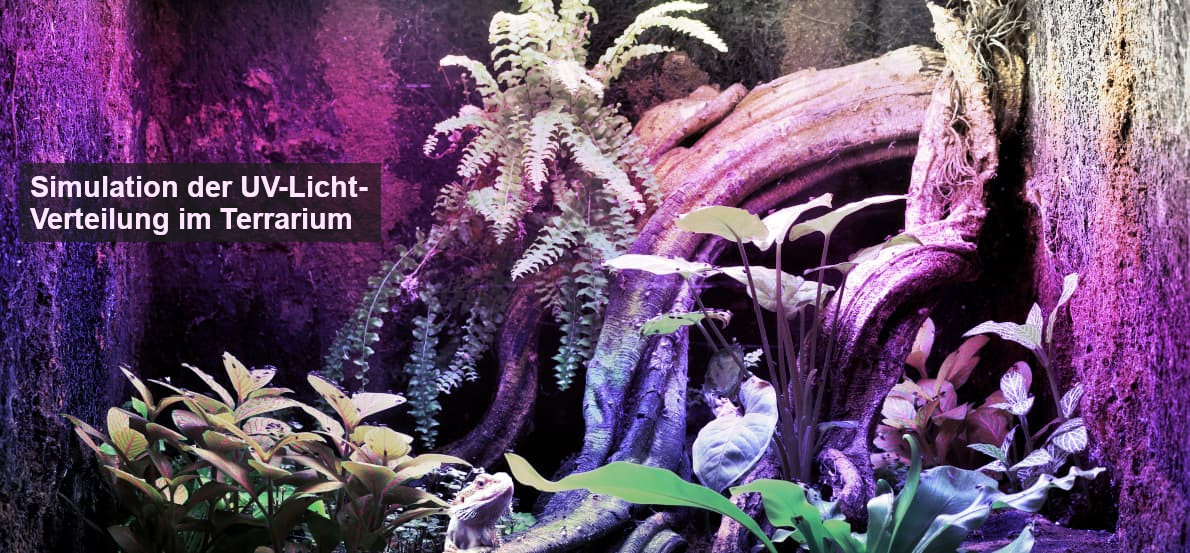
In the wild, many reptiles specifically choose sunny spots with certain UV levels. In the terrarium, it is our responsibility to create the necessary environment in which they can live healthily and behave in a manner appropriate to their species.
Circadian Rhythm: The Internal Clock
Light influences hormonal processes and the day-night rhythm.
Unnatural spectra or constantly constant intensity can lead to stress and behavioural abnormalities.
A natural lighting concept therefore takes into account:
- the full light spectrum
- sufficient UVA & UVB
- realistic intensities
- structured light zones
Conclusion: If You Understand Reptiles, You Understand Light
Species-appropriate lighting is not an optional accessory.
It is a central element of responsible care.
When you look at reptiles from a biological perspective, you realise:
Light influences vision, metabolism, behaviour and well-being in equal measure.
And that is precisely why it deserves special attention.
Lighting products with UV content
-

SOLAR RAPTOR® BirdLamp HID 35W PAR30 Flood-Strahler
42,90 € -
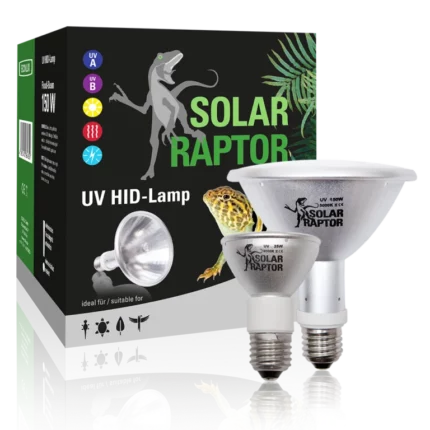
SOLAR RAPTOR® UV HID-Lamp
from 39,90 € -
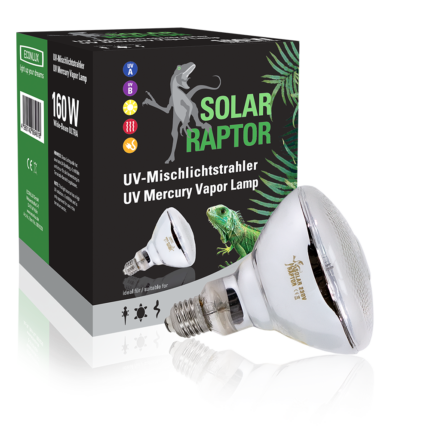
SOLAR RAPTOR® UV Mercury Vapor Lamp
42,90 € -
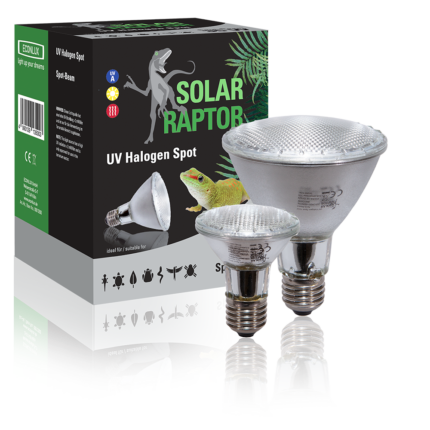
SOLAR RAPTOR® UV Halogen Spot
from 15,90 €