



FAQ: UV measuring devices in terrariums
The handy UV measuring devices from SOLARMETER® are known for their precise measurement of UV radiation and intuitive operation. This makes them equally suitable for professional use in laboratories and for private users, for example in terrariums.
However, reptile enthusiasts are often unsure which UV meter is more suitable for which purpose.
The following FAQs will help you find the ideal device for your intended use.
Why should I measure UV radiation in the terrarium at all?
UV radiation is vital for many reptiles, but invisible to the human eye.
It is impossible to tell, either by sight or by touch, whether a UV lamp is emitting sufficient UV radiation. Without taking a measurement, it remains unclear whether basking spots actually provide natural conditions appropriate to the species – or whether the lamps have already lost a significant amount of their output.
What is the difference between the SOLARMETER® 6.5R UV Index and the SOLARMETER® 6.2R Reptile UVB?
The two devices use different measurement approaches:
- SOLARMETER® 6.5R Reptile UV Index
→ measures UVA/UVB and uses this to calculate a UV index (UVI)
→ ideal for assessing basking spots based on the Ferguson zones → measures UVB directly and displays the specific reading
→ ideal for monitoring the UV output of lamps over time
Both devices complement each other, but do not replace each other.
Which UV meter is suitable for beginners?
For most reptile owners, the SOLARMETER® 6.5R Reptile UV Index is the best place to start.
The UV index is:
- Easy to understand
- Directly linked to the Ferguson zones
- Can be interpreted without in-depth specialist knowledge
This allows sunbathing spots to be assessed quickly and reliably.
Was sind Fergusson-Zonen?
Ferguson zones describe the natural UV conditions that reptiles are exposed to in their natural habitat (e.g. forest shade, open savannah, rocky areas).
The UV index output by the SOLARMETER® 6.5R Reptile UV Index corresponds exactly to these zones and makes them measurable in practice.
We have compiled more information on the concept of Ferguson zones, including examples of which species are assigned to which zones, → here.
Why does the Solarmeter 6.5R not display ‘real’ measurements?
This is intentional.
Instead of abstract numbers, the device provides a biologically relevant index that directly tells you:
👉 Is this location suitable for my species or not?
This is much more helpful for setting up and evaluating sunbathing spots than raw data alone.
Why do UV lamps age – and why is this a problem?
UV lamps continuously lose UV output during operation because the UV-emitting material inside is consumed.
Important:
- The lamp often still shines brightly, but emits significantly less UV light.
- The ageing process is not visible.
- The speed varies greatly depending on the lamp.
Without measurement, the animals in a seemingly well-lit terrarium may be unnoticedly undersupplied with UV light – with negative consequences for their health or reproduction.
Which device is suitable for monitoring lamp ageing?
The SOLARMETER® 6.2R Reptile UVB is the better choice for ongoing monitoring of lamp ageing.
As it displays the exact UVB value, you can:
- Reference new lamps
- Compare the UV output regularly
- Decide objectively when a light source should be replaced
An index display is much less suitable for this purpose, as it does not rule out the risk of undetected UV deficiency in animals as reliably as continuous, accurate measurement of the lamps.
Can I also use the SOLARMETER® 6.2R Reptile UVB to evaluate sunbathing spots?
In principle, yes – but with restrictions.
The SOLARMETER® 6.2R Reptile UVB provides raw data that:
requires specialist knowledge
is not directly assigned to a Ferguson zone
The SOLARMETER® 6.5R Reptile UV Index is much more intuitive for the practical evaluation of basking spots.
Do I need both devices?
That depends on your requirements:
Single device / all-round use:
The → SOLARMETER® 6.5R Reptile UV Index is more suitable for this requirementOptimal long-term UV provision & lamp monitoring:
For this purpose, there is virtually no alternative to the combined use of → SOLARMETER® 6.5R Reptile UV Index + → SOLARMETER® 6.2R Reptile UVB.
Many experienced keepers therefore use both devices:
6.5R Reptile UV Index for correct placement
6.2R Reptile UVB for permanent control of the light source
How often should I measure UV lamps?
The following is recommended:
For new lamps: reference measurement
During operation: every 2–3 months
Additionally: after changes to height, reflector or distance
This allows gradual UV loss to be reliably detected.
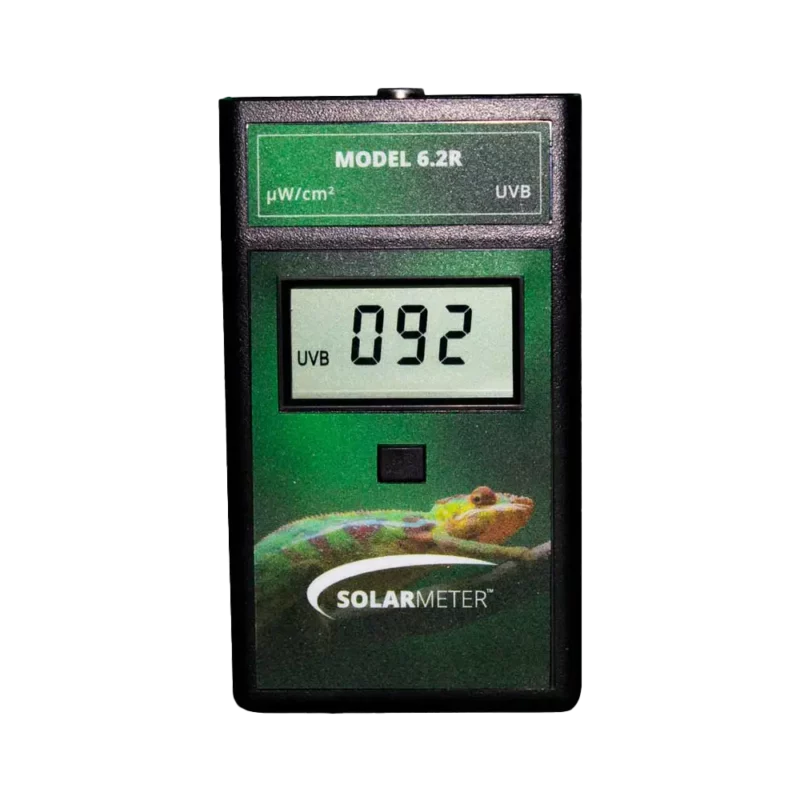
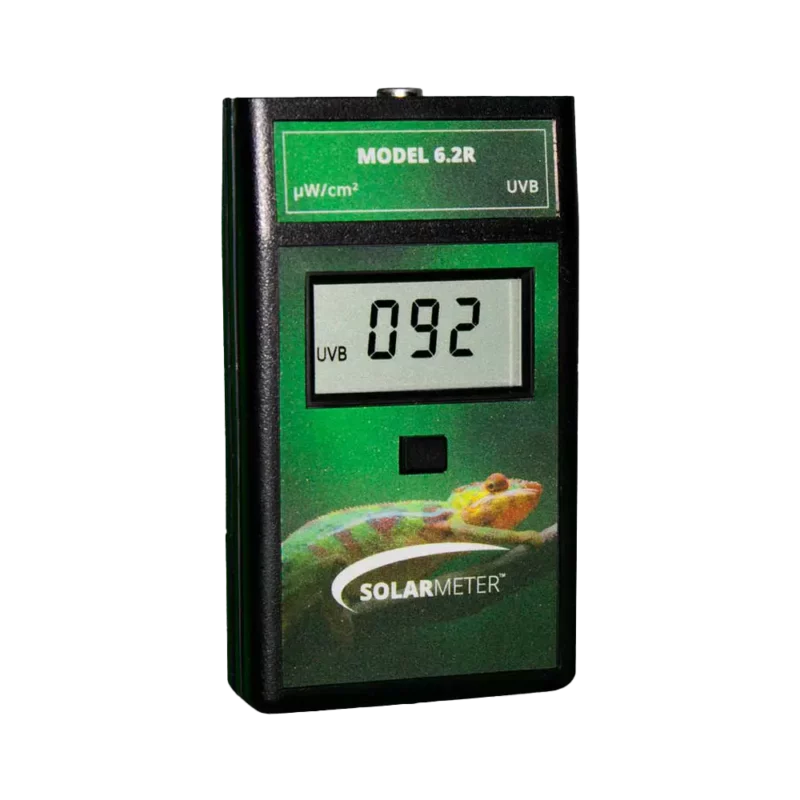
Solarmeter® 6.2R Reptile UVB
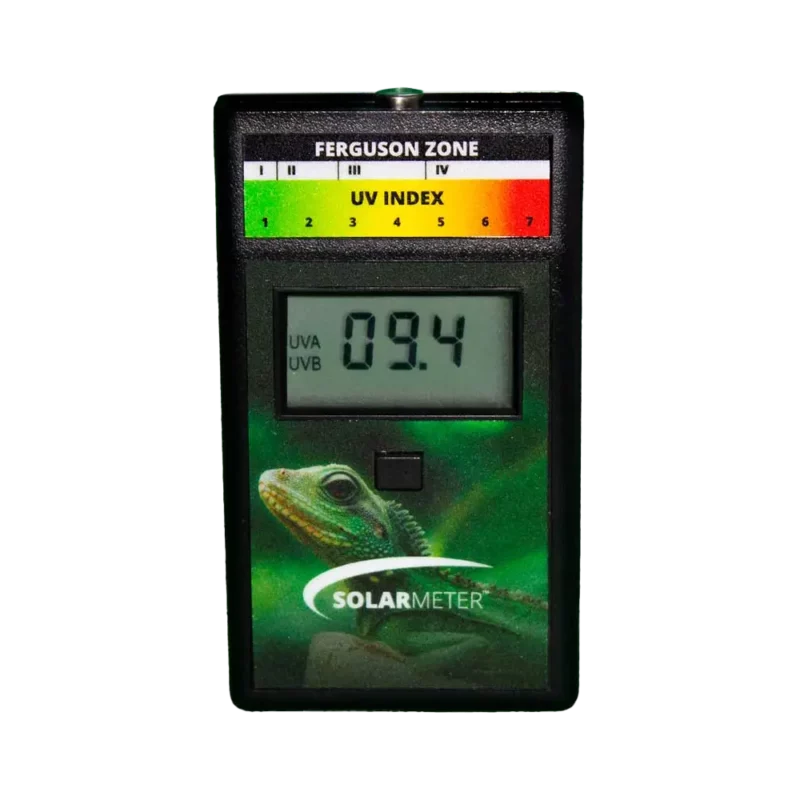
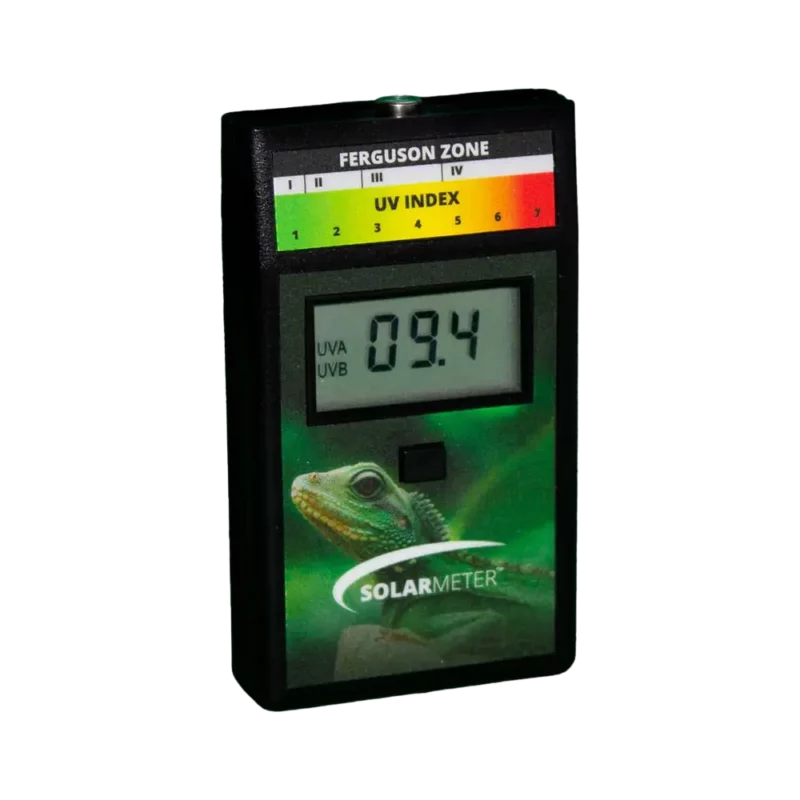
Solarmeter® 6.5R Reptile UV Index
Conclusion: Which solar meter is right for me?
I want to ensure my animals receive species-appropriate UV
→ SOLARMETER® 6.5R Reptile UV IndexI want to know how much UV my lamps are actually still emitting
→ SOLARMETER® 6.2R ReptileI want to keep a reliable eye on both
→ both devices complement each other perfectly